
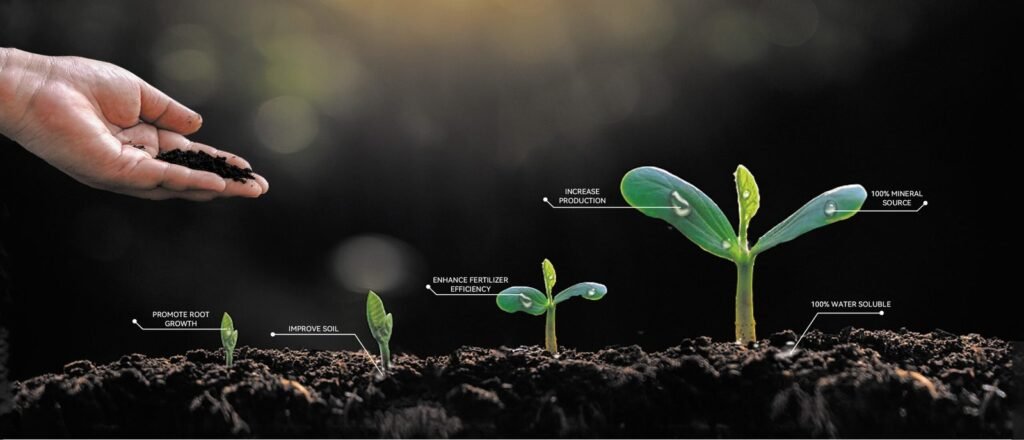
Most plants do well with humic acid. You can see good results in fruits like apples, bananas, and tomatoes. Grains such as wheat and barley also benefit. Humic acids help berries like blueberries and strawberries grow better. Flowers like roses and marigolds get stronger and healthier with humic acid. Many crops and houseplants get better soil and take in more nutrients. Studies show that strawberries, onions, tomatoes, and beans grow more, have bigger leaves, and are healthier when you use humic acids.
Plant Species | Benefits from Humic Acid Application |
|---|---|
Strawberry | Better growth and fruit quality |
Onion | Improved growth and nutrient absorption |
Tomato | |
Bean | Larger leaves and increased yield |
Humic acids help almost all garden and crop plants. They make plants grow well in healthy soil.
Humic acid helps many plants grow strong and healthy. It can also help plants make more fruit or flowers. Humic acid makes soil softer and helps it hold more water. It also helps plants take in nutrients better. You can use humic acid on the soil or spray it on leaves. Use it during important times when plants are growing. Always follow the right amount for best results. Most plants do well with humic acid. Some sensitive plants need less and careful use. Do not use too much humic acid. Too much can hurt plants and soil. Start with a small amount and watch your plants closely.
Plants that Benefit from Humic Acid

Fruits and Berries
Humic acid helps many fruits and berries grow better. It works for apples, bananas, mangoes, citrus, tomatoes, peppers, potatoes, blueberries, and strawberries. Scientists found that humic acid makes these plants grow more leaves and fruit. It also helps them make more vitamin C and stops fruit from going bad. The phenolic compounds in humic acid act like antioxidants. This makes the fruit taste better and be healthier.
Tip: You can spray humic acid on leaves or put it in the soil. Try using it when flowers bloom and fruit starts to grow for best results.
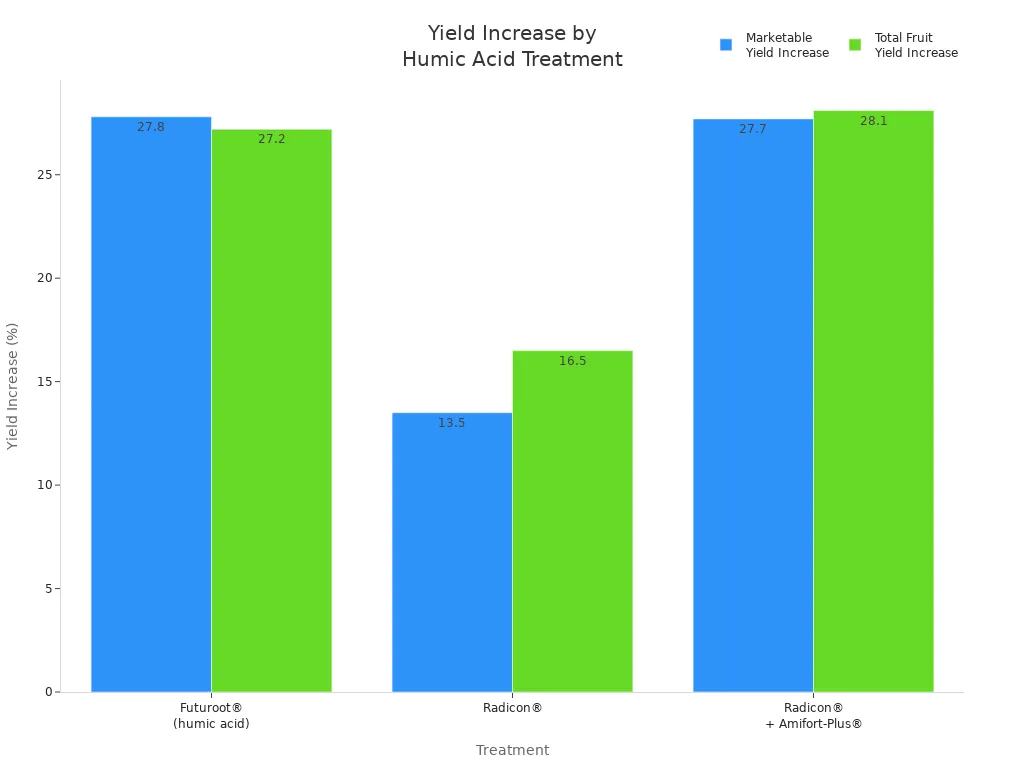
Here is a table that shows how humic acid helps some fruit crops grow more:
Crop | Treatment | Marketable Yield Increase | Total Fruit Yield Increase | Notes |
|---|---|---|---|---|
Tomato | Futuroot® (humic acid-based) | 27.8% | 27.2% | Yield increase due to humic acids and microelements |
Tomato | Radicon® | 13.5% | 16.5% | Contains humic acids and microelements |
Tomato | Radicon® + Amifort-Plus® | 27.7% | 28.1% | Humic acids and magnesium chelated microelements improve productivity |
Cantaloupe | Humic substances | More fruits, bigger size | Higher weight | Improved fruit size and yield |
Watermelon | Humic substances | Total yield +11.8% | Especially effective under water stress | |
Pepper | Humic acid (foliar/soil) | Higher fruit yield | Heavier fruit | Best results at 20 ml/l foliar application |
Vegetables and Grains
Vegetables and grains grow stronger with humic acid. Tomatoes, cucumbers, carrots, potatoes, beans, wheat, maize, triticale, and soybeans all benefit. Humic acid helps roots grow and lets plants take in more nutrients. It also helps plants handle stress better. Cucumber and carrot show the biggest growth among vegetables. In grains like maize and triticale, humic acid makes the grains heavier and adds more protein.
A field test on maize showed the best results when humic acid was used with NPK and zinc. Here is a table that shows what happened:
Treatment | Germination (%) | Plant Height (cm) | Number of Cobs/Plant | Grains per Cob | 100-Grain Weight (g) | Grain Yield (t/ha) | Economic Benefit (BCR) |
|---|---|---|---|---|---|---|---|
Untreated Control | 88.85 | 187.27 | 1.81 | 315.9 | 19.35 | 4.15 | 1.10 |
Humic Acid (25 kg/ha) | 91.65 | 200.33 | 2.15 | 326.7 | 23.63 | 5.05 | 1.07 |
NPK (120:60:60 kg/ha) | 94.98 | 213.07 | 2.35 | 327.23 | 24.23 | 6.13 | 1.67 |
Zinc (5 kg/ha) | 91.31 | 218.93 | 2.15 | 321.1 | 28.19 | 5.95 | 1.20 |
Humic Acid + NPK | 94.98 | 219.67 | 2.35 | 337.3 | 27.91 | 5.65 | 1.07 |
Zinc + NPK | 96.31 | 222.53 | 2.48 | 347.3 | 24.62 | 5.97 | 1.37 |
Humic Acid + NPK + Zinc | 94.65 | 222.20 | 2.65 | 347.23 | 28.25 | 6.87 | 2.40 |

Humic acid helps your vegetables and grains grow bigger, make more food, and stay healthy.
Ornamentals and Flowers
Flowers and ornamental plants also do better with humic acid. You can use it on roses, marigolds, zinnias, gerbera, chrysanthemums, gladiolus, tuberose, snapdragon, tulip, and alstroemeria. Humic acid makes flowers bigger and last longer. It also helps plants use nutrients better and fight stress.
Spraying humic acid on flowers like gladiolus helps them last longer after cutting.
Bio-stimulants with humic acid help plants grow more leaves and fight damage.
Marigold and zinnia have more flowers and grow taller.
Chrysanthemum and tulip have blooms that last longer and make more food from sunlight.
Note: Many plant experts say humic acid is good for lots of ornamental plants because of these benefits.
Lawns and Turf
Humic acid makes lawns greener and thicker. It works for Kentucky bluegrass, Bermuda grass, perennial ryegrass, creeping bentgrass, and paspalum turf. Humic acid helps roots grow deeper and makes soil better. It also helps grass take in more nutrients and look healthy.
Humic acid helps turf roots get more nutrients from the soil.
It makes roots grow, soil better, and grass look nice.
Both cool and warm season grasses like humic acid.
You can use humic acid every 30 to 45 days for best results.
Tip: Mix humic acid with amino acids to help your lawn fight stress and disease even better.
Trees and Shrubs
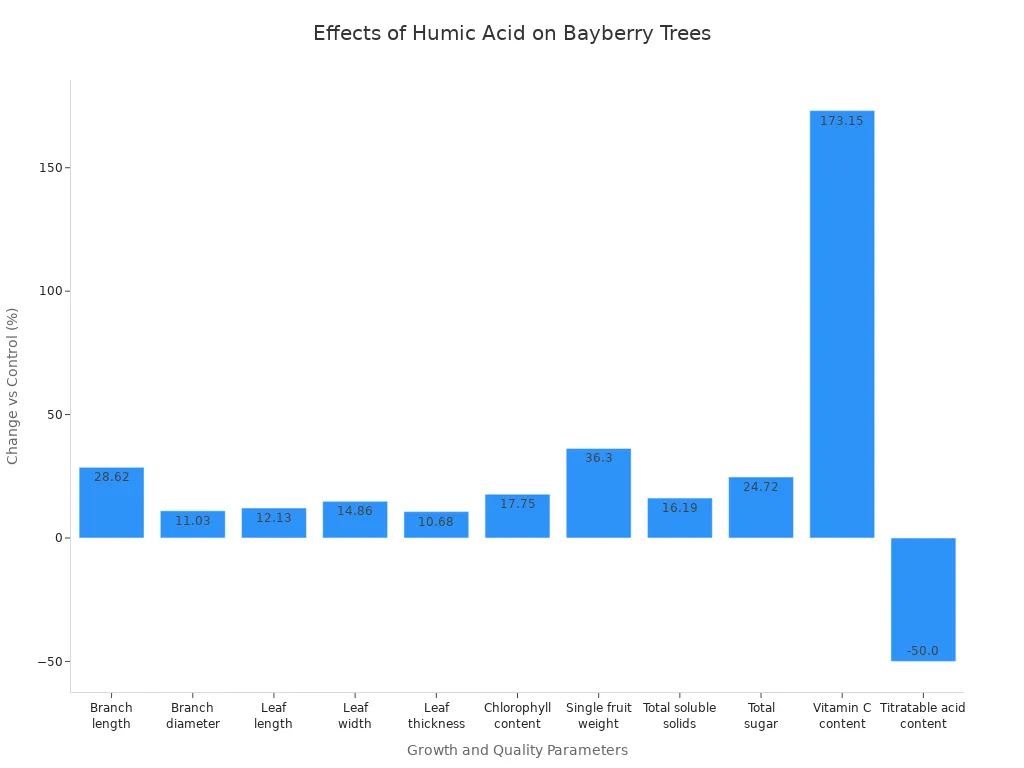
Trees and shrubs, like fruit trees and evergreens, grow better with humic acid. This natural compound makes branches longer, leaves bigger, and fruit better. For example, bayberry trees grew longer branches, wider leaves, and had more vitamin C after using humic acid. It also helps good microbes in the soil, which keeps trees healthy.
Parameter | Effect of Humic Acid Treatment Compared to Control (%) |
|---|---|
Branch length | +28.62% |
Branch diameter | +11.03% |
Leaf length | +12.13% |
Leaf width | +14.86% |
Leaf thickness | +10.68% |
Chlorophyll content | +17.75% |
Single fruit weight | +36.30% |
Total soluble solids | +16.19% |
Total sugar | +24.72% |
Vitamin C content | +173.15% |
Titratable acid content | -50.00% |
Research shows Platycladus orientalis trees grow better with humic acid. They have more shoots, better color, and survive more.
Houseplants
Humic acid helps houseplants in pots or containers grow well. It makes nutrients like calcium, magnesium, and phosphorus easier for roots to take in. Humic acid also removes toxins, loosens hard soil, and helps soil hold water. This gives plants greener leaves, thicker stems, and stronger roots.
Aspect | Effect of Humic Acid on Indoor Plants in Potting Mixes |
|---|---|
Nutrient Uptake | Increases nutrient absorption by up to 40% |
Plant Growth | Greener leaves, thicker stems, stronger roots |
Root Development | Up to 20% more root growth, faster root elongation |
Soil Structure | Better soil aggregation, aeration, and moisture retention |
Microbial Support | Stimulates beneficial microbes, improving nutrient release |
Application Methods | Soil drench, foliar spray, or soil amendment |
Soil Fertility | Improves cation exchange capacity, leading to long-term fertility |
Stress Resistance | Healthier, more robust plants with better resistance to stress |
Humic acid helps good microbes in the soil, so houseplants can fight pests and diseases. You can use it as a soil drench or spray, but always follow the directions for potted plants.
Most garden and crop plants, like fruits, vegetables, grains, flowers, turf, trees, and houseplants, do better with humic acid. You will see more growth, bigger harvests, and healthier plants in many types of plants.
How Humic Acid Supports Plant Growth
Root and Shoot Development
Humic acids help plants grow faster and stronger. They make roots and shoots develop better. When you use humic acid, it helps plant hormones work well. This lets roots take in more water. Humic acids also turn on enzymes that help shoots grow. They keep harmful oxygen in balance and start signals with calcium-kinase. This makes roots grow in a better way.
Mechanism Type | Description |
|---|---|
Increases root water uptake and supports shoot growth | |
Enzyme Activation | Boosts H+-ATPase activity for better nutrient uptake |
ROS Homeostasis | Balances reactive oxygen species for healthy root development |
Calcium-Kinase Signaling | Triggers pathways for root and shoot growth |
Physical Interaction | Causes mild stress at root surface, starting growth signals |
Research shows humic acids can make roots much heavier. Shoots can also get thicker and heavier. Wheat seedlings can have up to 106% more root weight. Shoots can be up to 55% heavier. You will see longer roots and more root hairs. Shoots will look thicker. This helps plants get more water and nutrients. Plants become healthier and grow better.
Stress Tolerance
Humic acids help plants deal with tough times. They help plants when there is not enough water or when it is too hot. Humic acid makes roots grow better and helps soil hold more water. This helps plants survive dry weather or salty soil. Humic substances also turn on special genes and proteins. These protect plants from heat and stress.
Plants can have stronger seeds and more green color. They can also grow taller when stressed. Humic acids help plants stay healthy even in bad conditions. They lower damage from harmful oxygen. This keeps leaves and roots safe.
Yield and Quality
Humic acids help plants make more food and better crops. They help plants take in more nutrients. This makes plants grow more and do better. Tests show humic acid can raise seed yield and protein in crops. Crops like cowpea and wheat get more minerals too.
Aspect | Effect of Humic Acid Treatment |
|---|---|
Pericarp Thickness | Thicker fruit skin, better water retention |
Calcium Content | Higher calcium in fruits, stronger cell walls |
Phenolic Compounds | More antioxidants, improved nutritional quality |
Shelf Life | Longer storage time, less spoilage |
Fruits and vegetables with humic acids have thicker skins. They keep water better and last longer after picking. Fulvic and fulvic acids also help make crops healthier. If you use humic acid often, you will get more crops and better quality. Your plants will be healthier too.
Humic Acid and Soil Fertility

Improving Soil Structure
Humic acids can make your soil softer and easier to dig. They stick soil pieces together to form small clumps. These clumps make more spaces for air. Roots can grow deeper and stronger in this soil. Humic acid helps break up hard, packed soil. This lets roots move through the dirt better. Both gardens and potted plants get softer soil with humic acids.
Here are some ways humic acids help soil:
They make more spaces for roots and water to move.
They stop soil from getting too hard for roots.
They add more organic matter, making soil richer.
They help good microbes grow in the soil.
They grab onto harmful metals, keeping plants safe.
When your soil gets better, your plants will look healthier and grow faster.
Water Retention
Humic acids help soil hold more water for plants. When you add humic acid, it keeps water close to the soil. This stops the soil from cracking when it gets dry. Plants can use water longer, even when it does not rain. Studies show humic acid helps soil keep water and lose less to the air. In sandy soil, humic acids keep water near the roots. You will not need to water as much.
Tip: Use humic acid in your garden or pots to help plants during dry times and water less often.
Nutrient Availability
Humic acids help your soil give plants more nutrients. They unlock nutrients like nitrogen, phosphorus, and potassium. Humic acid helps soil hold onto these nutrients for your plants. Fulvic and fulvic acids also help roots take in nutrients more easily.
Nutrient | How Humic Acids Help |
|---|---|
Nitrogen | Stop it from washing away, help plants use it |
Phosphorus | Make it easier for plants to get |
Release it from clay, help plants take it in |
Humic acids also help soil stay healthy by feeding good microbes. When you use humic acid, your plants get more of what they need to grow. Organic fertilizers with humic acids help your garden or potted plants do their best.
Application Tips for Plants
Soil Drench
You can use humic acids as a soil drench for many types of plants. This method helps roots take in nutrients and water. Mix humic acids with water and pour the solution around the base of your plants. This works well for lawns, potted plants, houseplants, flowers, row crops, trees, and greenhouse plants. The table below shows how much to use and when to apply:
Plant Type | Application Rate & Method | Timing & Notes |
|---|---|---|
Lawn | 2 oz per gallon water; spray 1 gal/100 sq ft | Morning or evening, avoid hot afternoons |
Potted Plants | 2 tbsp per cubic foot soil or 2 tsp per gallon water | Best in spring or fall, at planting or transplanting |
Houseplants | 2 tsp per gallon water; water every 6-8 weeks | For all indoor plants |
Flowering Plants | 1 tbsp per gallon water; spray on soil | Morning or evening, avoid evaporation |
Row Crops | 1/4 tsp per liter water; spray soil or leaf undersides | Boosts germination and root growth |
Trees | 2-3 oz per gallon water; pour around root zone | Every 2-3 weeks |
Greenhouse | 1 kg per 200 L water per hectare; 5 g/L for small sprayers | Adjust for greenhouse size |
A soil drench with humic acids can increase root mass and help plants resist drought. Studies show that this method improves root growth in crops like cucumber, squash, and marigold.
Foliar Spray
You can also apply humic acids as a foliar spray, but results may vary. Foliar sprays work best with fulvic acids, which have smaller molecules and are easier for leaves to absorb. These sprays can boost antioxidant levels, nutrient uptake, and stress tolerance in plants like wheat, maize, and tomatoes. However, some studies show that foliar sprays of humic acids may not always improve growth, especially in beans or under drought stress. Foliar sprays may help plants recover from waterlogging or certain types of stress.
Tip: Use foliar sprays in the early morning or late afternoon to avoid leaf burn and get the best results.
Timing and Dosage
Apply humic acids during key growth stages for the best effect. Early growth, transplanting, and root dormancy breaking are the most important times. You can also use humic acids when plants look stressed or after heavy rain. Combining humic acids with nutrients like nitrogen or phosphorus can help reduce transplant shock and support strong early growth. Always follow label instructions for dosage, as too much can waste product or harm plants.
For lawns and gardens, apply every 4-6 weeks during the growing season.
For potted plants and houseplants, use every 6-8 weeks.
For trees, apply every 2-3 weeks around the root zone.
Note: Adjust the amount based on plant size and soil type. Start with the lowest recommended rate and watch how your plants respond.
Exceptions and Considerations
Sensitive Species
Most plants do well with humic acid, but some need care. A few plants, like some orchids and carnivorous plants, like soil with very few nutrients. If you grow these plants, use a small amount of humic acid first. Watch your plants for any changes. Some rare ferns and mosses can also react in a different way. Always check how each plant acts before using humic acid all the time.
Note: If leaves turn yellow or plants stop growing after using humic acid, use less or stop for that plant.
Overuse Risks
Using too much humic acid can hurt your plants. They might not get the right nutrients or may stop growing well. Too much can also change the soil pH, making it hard for roots to get food. Always follow the label for how much to use. Start with the smallest amount, especially if you have never used humic acid before. Watch your plants for anything strange.
Using too much humic acid can cause salt to build up in the soil.
Some plants can get stressed if you use high doses too often.
If you see bad effects, wash the soil with water and stop using humic acid for a while.
Soil Type Factors
The kind of soil you have changes how humic acid works. Sandy soil gets the most help because humic acid keeps water and nutrients in the soil. Soils with little organic matter, like new land or alkaline soil, get more nutrients when you use humic acid. What you added to your soil before, like compost or manure, also matters. These things can change how humic acid works with nutrients.
Long studies show humic acid acts differently in different soils and with different amendments. Soils that buffer well can control how nutrients move and keep roots safe. Always think about your soil and what you have added before using humic acid. Change what you do if your plants or soil start to look different.
Tip: Test your soil before you start using humic acid. This helps you pick the right amount and avoid problems.
Humic acid helps most plants grow better. It makes soil richer and helps plants get strong. Fruits, vegetables, flowers, lawns, and houseplants all do well with it. You will see healthier plants and brighter leaves. Use humic acid the right way and your garden will grow more. Taking good care of your plants makes them greener and healthier.
FAQ
What is humic acid?
Humic acid is a natural substance found in soil and compost. You can use it to help plants grow stronger. It improves soil health and helps roots take in more nutrients.
Can you use humic acid on all plants?
You can use humic acid on most plants, including fruits, vegetables, flowers, and lawns. Some sensitive plants, like certain orchids or carnivorous plants, may need less. Always start with a small amount and watch your plants.
How often should you apply humic acid?
You should apply humic acid every 4 to 6 weeks during the growing season. For houseplants, use it every 6 to 8 weeks. Always follow the instructions on the product label.
Does humic acid replace fertilizer?
Humic acid does not replace fertilizer. You should use it with your regular fertilizer. Humic acid helps plants use nutrients better, but it does not provide all the nutrients plants need.
What is the best way to apply humic acid?
You can use humic acid as a soil drench or a foliar spray. Mix it with water and pour it around the base of your plants. For best results, apply it in the morning or evening.