
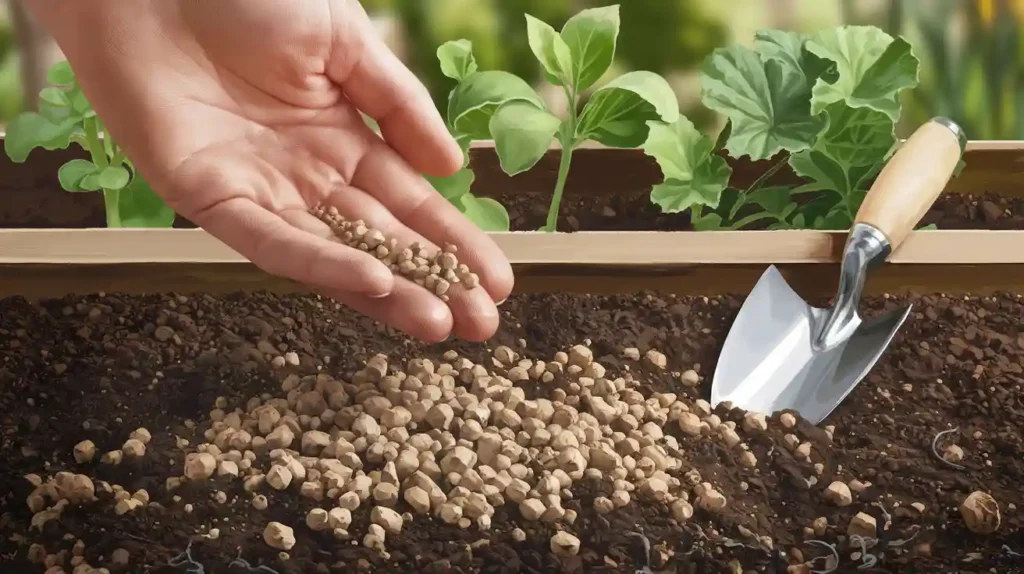
You want your plants to grow well and stay healthy. Using the right soil conditioner helps a lot. There are more choices now than before. In 2024, people in the U.S. spent $865.8 million on these products. This number goes up by 7.9% every year.
More growth means you get more choices.
People want better soil and care about the environment.
Category | Examples | Benefits/Notes |
|---|---|---|
Organic Soil Conditioners | Compost, Manure, Henzsoil Organic Conditioner | Good for the earth, makes soil better |
Chemical Soil Conditioners | Agricultural Lime, Sulfur, Phosphogypsum | Changes soil fast |
Natural Soil Conditioners | Zeolite, Expanded Clay, Dolomite | Comes from nature, helps soil |
Biological Soil Conditioners | Beneficial Bacteria, Mycorrhizal Fungi, Algae | Uses tiny living things to help soil |
Synthetic Soil Conditioners | Water-absorbing polymers | Holds more water, makes soil stronger |
You should pick the category that works for you. Choose what helps your garden and matches your goals.
Key Takeaways
Soil conditioners help plants grow better. They make soil quality higher. Pick the right kind for your soil’s needs.
Organic soil conditioners, like compost, help soil stay healthy for a long time. They add good things to soil and help helpful microbes.
Inorganic choices fix soil problems fast. They can change pH and give nutrients quickly. They might not help soil health for a long time.
Test your soil first. This shows what your garden needs. It helps you pick the best conditioner.
Always check product labels and look for certifications. This helps you pick safe and good soil conditioners for your garden.
Soil Conditioner Overview
What Is It?
You want your garden to do well. To help your plants, you should know what a soil conditioner is. Some people think it is only fertilizer, but it does more than that. A soil conditioner changes how the soil feels and works. It helps plants grow strong and healthy.
Chapter 200 says a soil conditioner is any substance that helps plants or soil grow better. It is not a fertilizer, pesticide, or regular animal and plant manure. It is also not calcium or magnesium carbonate used to fix soil acidity.
You can use a soil conditioner to make your soil better. It helps plants grow and gives them good conditions. You can use it for lawns, gardens, or big farms. Your plants and crops will look better and grow more.
Benefits
Using a soil conditioner gives your soil and plants many good things. Here are some of the top benefits:
Makes hard soil softer
Helps soil stay healthy
Lets good microbes help plants get nutrients
Makes soil particles stick together better
Makes soil structure better
Helps sandy soil hold more water
Helps clay soil drain and get air
Holds lots of water
Keeps nutrients in the soil
Gives nutrients to crops as it breaks down
You want your plants to grow their best. Picking the right soil conditioner helps your garden a lot. Good soil means strong roots, better water use, and prettier plants. Try it and see the difference.
Soil Conditioner Types
Organic
If you want healthy soil, organic soil conditioners help. They use things like compost, manure, and plant parts. These materials feed the soil and help it keep water and nutrients. Jump Start is a well-known organic soil conditioner. It has humic acid, helpful microbes, and organic matter. These things help roots grow deep and make soil easier to dig. You do not use harsh chemicals, so your plants stay safe.
Castine Blend Organic Raised Bed Mix 2 CF: $19.99
Espoma Horticultural Charcoal 4QT: $15.99
Happy Frog Soil Conditioner 1.5 CU FT: $13.99
Leaf Compost: $5.99
Mushroom Compost: $5.99
Peat Moss 1 Cu Ft: $9.99
Peat Moss 2.2 Cu Ft: $17.99
You might pay more for organic, but it helps for a long time. Your soil gets better, and your plants grow strong.
Inorganic
Sometimes you need fast results or want to fix a problem. Inorganic soil conditioners use minerals and chemicals to change soil quickly. They can change pH, add nutrients, or help water drain.
Gypsum (calcium sulfate)
Lime (calcium oxide)
Limestone (calcium carbonate)
Pyrites (iron sulfide)
Crushed rocks (various minerals)
Fly ash (silica, alumina, iron)
Sulphur (elemental sulfur)
Zeolites (aluminosilicate minerals)
Dolomite (calcium magnesium carbonate)
Phosphogypsum (calcium sulfate)
You usually spend less on inorganic than organic. But organic makes soil healthier over time, while inorganic may not.
Liquid
Liquid soil conditioners work fast. You spray or pour them on soil or plants. They soak in quickly and start working right away. Many gardeners use them for quick fixes or to feed plants through leaves.
Advantages of Liquid Soil Conditioners | Disadvantages of Liquid Soil Conditioners |
|---|---|
Works fast and easy to use | Needs to be used often |
Can feed plants through leaves | Might not spread evenly |
Costs less each time you use it |
You get quick results, but you may need to use them more.
Granular
Granular soil conditioners are small pellets or grains. You spread them on the soil, and they break down slowly. This gives plants nutrients over time and helps the soil.
Fertilizer Type | Soil Impact Pros | Soil Impact Cons |
|---|---|---|
Liquid Fertilizer | Works fast, helps microbes | Needs to be used often, can run off |
Granular Fertilizer | Lasts a long time | Can make soil hard or more acidic |
Granular products are good for long-term help. They are great for busy people who do not want to use soil conditioner often.
Equipment Attachments
If you have a big area or tough soil, equipment attachments help. These tools go on skid steers or tractors. They mix, level, and fix the soil.
Popular brands are:
Skid Pro Soil Conditioner: Uses a strong motor and tough teeth for deep soil work.
Erskine Soil Conditioner: Picks up rocks and trash, breaks up soil, and makes seedbeds.
Stinger and Jenkins: Known for being strong and good at preparing soil.
Here are some prices for equipment attachments:
Product Description | Price Range |
|---|---|
Erskine Mini Soil Conditioner (48” & 60” width) | $10,334.50 – $12,630.20 |
Erskine Skid Steer Attachments Mini Soil Conditioner | $7,595.00 – $8,895.00 |
48" Erskine Mini Skid Steer Soil Conditioner | $600.00 |
You can find these tools from $600 up to $19,000. The price depends on size and features. These tools help you work faster and get good results.
Tip: Pick the soil conditioner that fits your needs. You can start with a small bag of compost or use a big machine. The right choice helps your plants grow and makes your job easier.
Choosing Soil Conditioner
Soil Needs
You want your plants to do well. First, check your soil. Every garden has its own soil type. You need to pick a soil conditioner that fits your soil. Here is how you can check your soil:
Sandy soil lets water drain fast. It loses water and nutrients quickly. Add compost or peat moss to help it keep more.
Silty soil holds water but may not have enough nutrients. Mix in compost or manure to make it richer.
Clay soil keeps water and can get very hard. Use compost, aged bark, or gypsum to help it drain and get air.
Loamy soil is the best mix. Keep it healthy by adding organic matter often.
You can test your soil with simple tools or send it to a lab. Here is a table that shows common tests and what they tell you:
Type of Test | Description |
|---|---|
Physical Soil Tests | Check structure, texture, density, and how water moves through the soil. |
Chemical Soil Tests | Find out pH, phosphorus, potassium, magnesium, calcium, and other nutrients. |
Total Nutrient Digestion | Measure carbon, nitrogen, phosphorus, and more to see how many nutrients are there. |
pH/Soil Acidity Tests | Show if your soil is acidic or alkaline. |
Soil Salinity Tests | Tell you about salt levels that can hurt plant growth. |
Haney Tests | Look at soil health, nutrients, and microbes. |
PLFA Tests | Study soil microbes and their groups. |
Microscopy | See which tiny living things are in your soil. |
Biological Soil Tests | Check how active and different your soil microbes are. |
Tip: Test your soil before you buy anything. You will know what your garden needs.
Plant Needs
Your plants need special care. Pick a soil conditioner that helps them grow strong. Some plants need more water. Others need better drainage or more nutrients. Think about what you want to grow.
Soil Inoculant | Beneficial Plant Species/Crop Types |
|---|---|
Bacillus subtilis | Cucumber, melons, squash, leafy vegetables, peppers, potatoes, tomatoes, walnuts, cherries, grapes, cotton, legumes |
Bacillus thuringiensis | Most crops |
Trichoderma spp. | Flowers, ornamentals, vegetables, root crops, hydroponic crops, fruits, nuts, transplants |
Pseudomonas spp. | Greenhouse ornamentals, nursery crops, vegetable transplants |
Streptomyces lydicus, griseoviridis | Many crops |
Gliocladium sp. | Ornamental, vegetable, and tree crops |
Crops that do not like dry weather, like potatoes, do better with plant growth-promoting microorganisms.
Arbuscular mycorrhizal fungi help plants use water and nutrients better, especially when it is dry.
Soil conditioners help plants get more nutrients and make it easier for roots to grow. Pick a product that matches your plant’s needs. If you grow vegetables, look for conditioners with helpful microbes. If you grow flowers, choose one that helps them bloom.
Aspect | Description |
|---|---|
Purpose | Soil conditioners make soil better for plant growth. |
Function | They help air, water, and nutrients stay in the soil. |
Impact on Soil | Change hard or sandy soil into better soil for growing. |
Soil conditioners make it easier for plants to get nutrients.
They help roots grow deep and strong.
Pick a conditioner that fits your plant’s nutrient needs.
Budget
You want good results without spending too much money. Soil conditioners come in many prices. You can buy small bags for less than $20 or big machines for thousands. Think about how big your garden is and what you want to do.
Note: Spending more on good quality often means better plants.
Before you buy, check for certifications and quality marks. These show the product is safe and works well.
Certification | Description |
|---|---|
QMGS | Quality Mark Good Soil means it is safe, good quality, pure, and easy to use. No harmful stuff inside. |
RHP | RHP certification means potting soil is clean and free of bad things. Best for plant growth. |
QMGS certification means your soil conditioner follows the rules and has nothing harmful.
RHP certification means your product is clean and helps plants grow well.
Compare prices and look for these marks. Pick a product that fits your budget and makes you feel safe.
Tip: Match your soil conditioner to your soil and plant needs. Look for trusted certifications. Spend your money wisely for the best results.
Buying Soil Conditioner
Local Stores
You can buy soil conditioners at garden centers or hardware stores. These stores give you more than just products. You get advice from people who know your area well. They help you choose what is best for your soil and plants. Buying from local stores helps your community and keeps jobs in your town. Local stores often have good materials that work in your climate.
Get help from staff and learn useful tips
Help your town and support local workers
Find products that fit your soil and weather
You can take your soil conditioner home the same day. You do not have to wait for shipping. You see the product before you pay for it.
Online Retailers
Online stores have many choices. You can shop any time and compare prices easily. Stores like Patuxent Nursery sell Leafgro® Organic Soil Conditioner. It helps soil structure and keeps water in the soil. Soilscape Solutions sends fertilizer and nutrients all over the country. If you buy more than $5,000, shipping is free. They use UPS for small orders and freight for big ones. Bulk soil ships only to California, Oregon, and Nevada.
Tip: Shopping online saves time and lets you read reviews. You may have to wait for delivery, so plan ahead.
Many choices and easy price checks
Shop from home any time
Shipping can take a few days
Equipment Dealers
If you need equipment, check with trusted dealers. Equipment Trader, Rock and Dirt, and Lano Equipment have many options. Delivery times are different for each dealer. For example:
Dealer Name | Average Delivery Time |
|---|---|
Titan Attachment Pro | 8–23 business days |
Triple S Attachments | 2–4 weeks |
You get advice and help from experts. Dealers help you pick the right tool for your job. They also offer service and parts if you need them later.
Pick the buying option that fits your needs and budget. The right soil conditioner helps your garden grow better.
What to Check Before Purchase
Labels
You want to pick the best soil conditioner for your garden. Always read the label before you buy. The label tells you what is inside. It also shows you how to use the product. Reading labels helps you find good quality. You can avoid problems by checking the label.
Here are things you should look for on every label:
Required Label Information | Description |
|---|---|
Brand Name | The name of the soil/plant amendment product. |
Guaranteed Analysis | Percentage of active and inert ingredients. |
Ingredient Listings | All ingredients, including any microbes. |
Name and Address of Guarantor | Contact information for the company or guarantor. |
Net Weight Statement | The weight or volume of the product. |
Directions for Use | Clear instructions for application. |
Purpose Statement | What the product is meant to do for your soil or plants. |
Tip: If the label is clear, you know what you are buying. This helps you pick the right product for your garden.
Certifications
Check for these common certifications:
Certification Type | Yield Increase (%) | Soil Health Improvement (%) | Environmental Standards Met | Validity Period |
|---|---|---|---|---|
Organic Soil Certification | 10–15 | 15–25 | No synthetic inputs, more biodiversity | 1–5 years |
ISO 14001 Certification | 8–12 | 12–20 | Global environmental management | 3 years |
Regenerative Agriculture | 15–25 | 20–35 | Carbon capture, more biodiversity | 3 years |
Demeter / Biodynamic | 8–18 | 20–30 | Strict organic, crop rotation | 1–5 years |
GLOBALG.A.P. | 12–20 | 16–24 | Food and environmental safety | 1 year |
GAP Certification | 10–18 | 15–22 | National/international agricultural standards | 1–3 years |
Look for these marks on the bag or bottle. Certified products help your garden and protect nature.
Price Comparison
You want to get the best deal for your money. Prices for soil conditioners are different at each store. Compare prices before you buy anything. Some products go on sale, so you can save money. Shopping smart helps you spend less.
Here is a price comparison for popular soil conditioners:
Product Name | Regular Price | Sale Price |
|---|---|---|
Super Soil Conditioner Bundle | $75.98 USD | $61.78 USD |
MicroLife Mycorrhizal Plus 9 LB Jug | $36.99 USD | $36.99 USD |
MicroLife Humates Plus 9 LB Jug | $35.99 USD | $35.99 USD |
MicroLife Humates Plus 40 LB Bag | $44.99 USD | $44.99 USD |
MicroLife MicroGro Bio Inoculant 9 LB Jug | $38.99 USD | $38.99 USD |
MicroLife MicroGro Bio Inoculant 25 LB Bag | $41.99 USD | $41.99 USD |
MicroLife Super Seaweed 1 Quart | $30.99 USD | $30.99 USD |
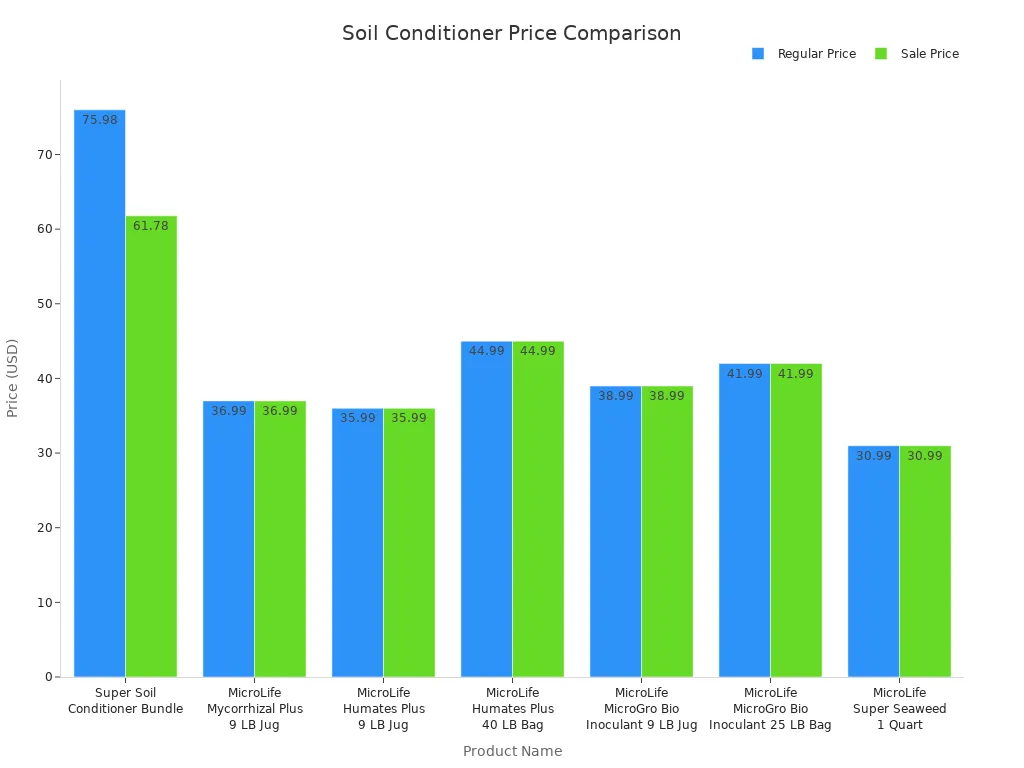
Compare prices and look for sales. You can buy great soil conditioners without spending too much. Smart shopping means better soil and more savings for you.
You can transform your garden by choosing the right soil conditioner. Start with these steps:
Test your soil to know what it needs.
Measure your garden to buy the right amount.
Remove rocks and weeds.
Loosen the soil to mix in the conditioner.
Spread the product evenly.
Mix and water well.
Feature | Benefit |
|---|---|
Aerates heavy soils | Promotes deeper root growth |
Breaks up clay layers | Improves drainage |
Enhances nutrient uptake | Boosts plant health |
Increases beneficial microbes | Supports disease resistance |
Contains vitamins and acids | Gives plants what they need to thrive |
Choose wisely, buy from trusted sellers, and watch your plants grow stronger and healthier. 🌱
FAQ
What is the best soil conditioner for my garden?
Pick a soil conditioner that matches your soil and plants. Compost is a good organic choice for most gardens. If you want quick results, use liquid or granular products. Always look for quality certifications before you buy.
How often should I apply soil conditioner?
Most gardens need soil conditioner once or twice a year. If your soil is clay or sandy, you might need it more often. Read the product label for instructions. Using it regularly helps your soil and makes plants stronger.
Can I use soil conditioner with fertilizer?
Yes, you can use both together. Soil conditioner makes the soil better. Fertilizer gives plants nutrients. Using both helps plants grow faster and look nicer. Always check the labels to use them safely.
Where can I buy soil conditioner near me?
You can buy soil conditioner at garden centers, hardware stores, or online. For equipment, go to trusted dealers. Ask store staff for help. Shopping local helps your community and gives you products for your area.