
Mineral humic acid comes from very old organic deposits. It is the main part of soil organic matter. Farmers and scientists like humic substances. They help soil become richer and hold more water. They also help plants grow better. Studies show humic acids can make plants bigger. They can also give plants more nutrients and help good microbes grow. More people now see how humic products help soil. The market for these products is getting bigger. Humic acids help soil keep nutrients and support crops. They are important for farming that is good for the earth.
Key Takeaways
Mineral humic acid comes from old plants like Leonardite and brown coal. It helps soil by holding on to nutrients and water.
It has big, complex molecules. These molecules dissolve in alkaline solutions. They do not dissolve in water or acids. This makes it different from fulvic acids, which are smaller and dissolve in water.
Mineral humic acid helps plants grow stronger. It makes nutrients easier for plants to use. It also helps good microbes in the soil.
Farmers use mineral humic acid by mixing it with soil or fertilizers. They can also spray it on plants. This helps plants grow and keeps soil from washing away.
Picking the right humic substance for your soil and crops is important. It helps plants stay healthy and gives better harvests.
Mineral Humic Acid
Source and Extraction
Mineral humic acid mostly comes from old materials like Leonardite and brown coal. Leonardite forms when plants and other things break down over a long time. This makes a material with lots of humic acids. Leonardite can have up to 85% humic acid. This is much more than peat or normal soil. Brown coal, also called lignite, is another main source. Both give a lot of organic matter for getting humic acid.
Scientists use different ways to get mineral humic acid. The most used way is with alkaline solutions like potassium hydroxide or sodium hydroxide. These solutions help pull humic acids out of the raw material. After this, acid is added to separate humic acid from other things. Sometimes, chemicals like nitric acid or hydrogen peroxide are used first to get more humic acid. Purification steps, like using hydrofluoric acid, take out extra minerals and ash. This keeps the humic acid clean.
Extraction Method / Treatment | Raw Material / Sample | Yield Efficiency (%) | Chemical Composition / Characterization Techniques | Notes |
|---|---|---|---|---|
KOH alkaline extraction (0.5%, 1.5%, 2.5%) | Bituminous coal | FTIR, SEM-EDX, spectroscopic analyses | Yield increases with KOH concentration | |
KOH alkaline extraction (0.5%, 1.5%, 2.5%) | Lignite coal | 9.98, 13.45, 21.89 | Same as above | Yield increases with KOH concentration |
KOH alkaline extraction (3.5%) | Lignite coal (Pakistani) | 26.4 | - | Maximal yield reported by Zara et al. |
Chemical pretreatment (Nitric acid) + fungal treatment | Subbituminous coal (Pakistani) | 54.2 | - | Significant increase in humic acid yield |
Chemical pretreatment (Hydrogen peroxide) + fungal treatment | Subbituminous coal (Pakistani) | 45.7 | - | Significant increase in humic acid yield |
IHSS recommended method with acidic pre-treatment (0.1 mol/L HCl) + alkaline extraction (0.5 mol/L NaOH) | Lignite samples from Kutch basin (Panandhro and Mata-no-Madh) | 28.5 (P-HAS), 26.4 (M-HAS) | Purification with 5% HCl/HF to reduce ash content (<1%) | Acidic pre-treatment facilitates extraction; purification reduces ash |
Extraction of HAL with NaOH | Pakistani lignite coal | 18 | - | - |
Extraction of Nitrohumic acids (NHA) with KOH after HNO3 regeneration (5%, 10%, 15%) | Pakistani lignite coal | 25.5, 33, 48 | - | Yield increases with HNO3 concentration |
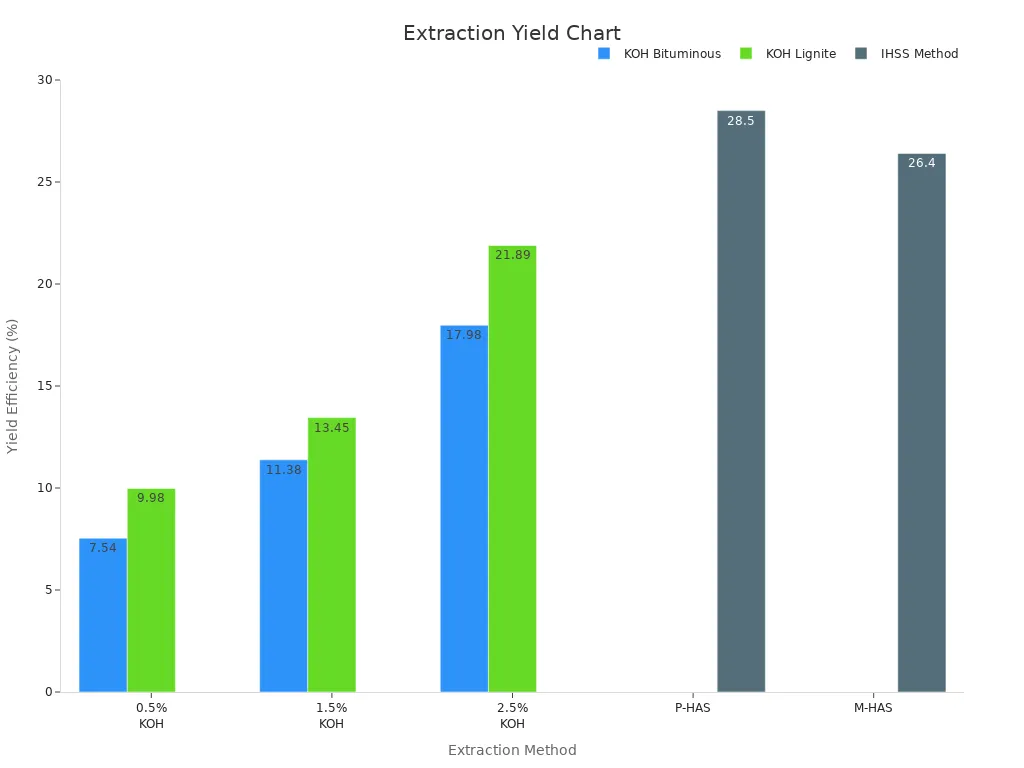
Note: The way mineral humic acid is taken out and cleaned changes how much is collected and how good it is. Picking the right method can make a big difference in how useful it is for soil.
Structure and Properties
Mineral humic acid has a very detailed structure. It has many groups like quinones, phenols, and carboxylic acids. These groups make humic acids act in special ways. The molecules are big and tangled together. This helps them mix with minerals and nutrients in soil.
Mineral humic acid does not dissolve well in water. It dissolves better in alkaline solutions but not in acids. Scientists use tools like FTIR and NMR to look at these structures. They see strong signs for aromatic and carboxylic carbons. These things make mineral humic acid different from fulvic acid. Fulvic acid is smaller and dissolves better in water.
Property / Feature | Mineral Humic Acid (HA) | Fulvic Acid (FA) / Other Humic Substances |
|---|---|---|
High molecular weight | Low molecular weight | |
Structural Complexity | Complex structures | Simpler structures |
Water Solubility | Poor water solubility; soluble in alkaline media, insoluble in acidic media | High water solubility |
Functional Groups Identified | Quinones, phenols, carboxylic acids | Fewer or different functional groups |
Spectroscopic Features (13C NMR) | Distinct chemical shifts at 110-160 ppm (aromatic, phenolic carbons), 173 ppm (carboxylic acids), 160-190 ppm (carbonyls) | Less pronounced or different chemical shifts |
Amphiphilic Behavior | Forms micelle-like structures in neutral to acidic conditions | Not typically amphiphilic |
Organic-Inorganic Complexes | Forms complexes with soil minerals (iron, aluminum oxides, clay minerals) enhancing stability | Less association with minerals |
Functional Properties | Antioxidant, anti-inflammatory, wound healing, fungicidal/bactericidal due to functional groups | Less pronounced or different bioactivities |
The large amount of humic acids in mineral humic acid gives it strong antioxidant and health effects. These help protect plants and keep soil healthy.
Mineral Salts and Nutrient Availability
Mineral humic acid is important for moving nutrients in soil. Its special groups, like carboxyl and hydroxyl ions, can stick to minerals like calcium and iron. This makes mineral salts that help keep nutrients ready for plants. In soil, humic acids fight with phosphate for places to stick. This stops phosphate from getting stuck too hard to soil. It makes it easier for plants to take in.
Studies show that adding humic acid to soil keeps more phosphate free. This means plants can use more of it. Humic acids also stop calcium phosphate from turning into hard lumps. By keeping nutrients like phosphate and calcium moving, mineral humic acid helps soil and plants.
Humic acids made from food waste work in a similar way. They look like natural mineral humic acid and help nutrients move in soil. Because they keep nutrients available, mineral humic acid is very useful for farming and taking care of soil.
Humic Substances Overview
Humic substances are made when plants and animals break down. These substances are very important for soil and plant health. Scientists put them into three groups: humic acid, fulvic acids, and humin. Each group has special features. These features change how they work in soil and how plants use them.
Humic Acid
Humic acid is the biggest part of humic substances. It has a large molecular weight, from 50,000 to 100,000 Da. Humic acid can dissolve in alkaline solutions. It does not dissolve in acids. It has many groups like carboxylic, phenolic, and carbonyl. These groups help it stick to minerals and nutrients in soil. Studies show humic acids have more aromatic and alkyl carbon than other types. This makes them help plants grow and improve soil.
Fulvic Acid
Fulvic acids are smaller molecules. Their weight is between 5,000 and 10,000 Da. They can dissolve in water at any pH. This helps them move around in soil. Fulvic acid has more oxygen and ionizable groups. This makes it more reactive. These acids help plants take in minerals. Fulvic acids have a higher cation exchange capacity than humic acid. Tests show fulvic acids stay dissolved even at low pH. Humic acids do not. Fulvic acids also have more polar aliphatic compounds. This is why they dissolve so well.
Humin
Humin is the third type of humic substance. It does not dissolve in water at any pH. Humin stays behind after taking out humic acid and fulvic acids. It has a complex structure and sticks tightly to soil. Humin helps soil structure but does not move nutrients as well as the other types.
Note: Humic acid, fulvic acids, and humin each have a special job in soil. Their size and how they dissolve make them different.
Humic Acid | Fulvic Acid | Humin | |
|---|---|---|---|
Solubility | Alkali-soluble; insoluble in acidic pH | Soluble across acidic to alkaline pH | Insoluble residue fraction |
Molecular Weight | 50,000 to 100,000 Da | 5,000 to 10,000 Da | N/A |
Chemical Composition | Mixture of aromatic and aliphatic organic acids | Mixture of weak aromatic and aliphatic acids | N/A |
Functional Groups | Carboxylic, phenolic, carbonyl, hydroxyl, amine, amide, aliphatic moieties | Higher oxygen content, more ionizable functional groups | N/A |
Particle Size | Smaller submicron particles | Larger submicron particles due to coil expansion in alkaline solution | N/A |
Extraction Behavior | Extracted by alkaline solutions; amount varies by peat type | Extracted more in acidic and neutral conditions | Insoluble, remains as residue |
Cation Exchange Capacity | Lower than fulvic acid | Higher than humic acid | N/A |
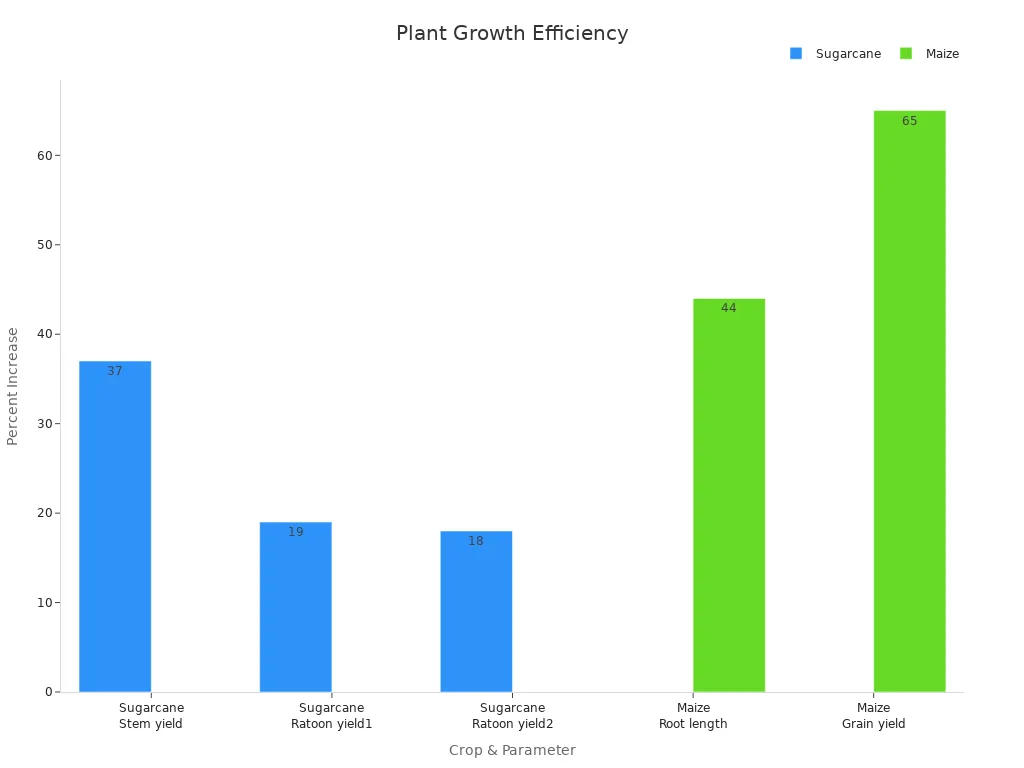
Researchers found that humic acids and fulvic acids help plants grow. For example, maize with humic acids had 65% more grain than untreated plants. Fulvic acids also helped peanuts and soybeans get heavier. These results show all humic substances help crops and soil stay healthy.
Mineral Humic Acid vs. Other Humic Substances

Structure and Solubility
Mineral humic acid, fulvic acids, and humin all have different shapes and ways they dissolve. Humic acid is made of big, tangled molecules. These molecules have parts called aromatic and aliphatic cores. They also have side groups like carboxyl and hydroxyl. Humic acid can join with things like peptides and sugars. This makes it heavy, usually between 2,000 and 200,000 Daltons. Humic acid dissolves in alkaline liquids but not in acids. When the pH goes down, it turns solid and drops out.
Fulvic acids are smaller and have more oxygen-rich groups. They have lots of carboxylates. These groups help fulvic acids dissolve in both acids and alkaline liquids. Fulvic acids move easily in soil and carry nutrients to roots. Humin is not like the others. It is black and solid. It does not dissolve in water or weak base. Humin has a strong aromatic structure and few polar groups. It stays in soil as a stable leftover.
Scientists use special tools like FTIR and NMR to look at these differences. They see humic acid has more aromatic carbon. Fulvic acids have more oxygen-rich spots. Humin is not very reactive and stays in soil for a long time.
Property | Mineral Humic Acid (HA) | Fulvic Acids (FA) | Humin |
|---|---|---|---|
Molecular Weight | High (2–200 kDa) | Low (smaller) | Very high |
Solubility | Alkaline only | All pH levels | Insoluble |
Main Functional Groups | Aromatic, aliphatic, carboxyl, hydroxyl | Carboxyl, hydroxyl | Carbonyl oxygen |
Color | Dark brown to black | Yellow to light brown | Black |
Soil Mobility | Moderate | High | Very low |
Soil and Plant Benefits
Humic substances help soil and plants in many ways. Humic acid acts like a magnet for minerals. It grabs iron and zinc and keeps them ready for plants. This stops nutrients from being lost. Plants get a steady supply of food. Humic acid also helps plants take in nitrate and ammonium. These are important forms of nitrogen.
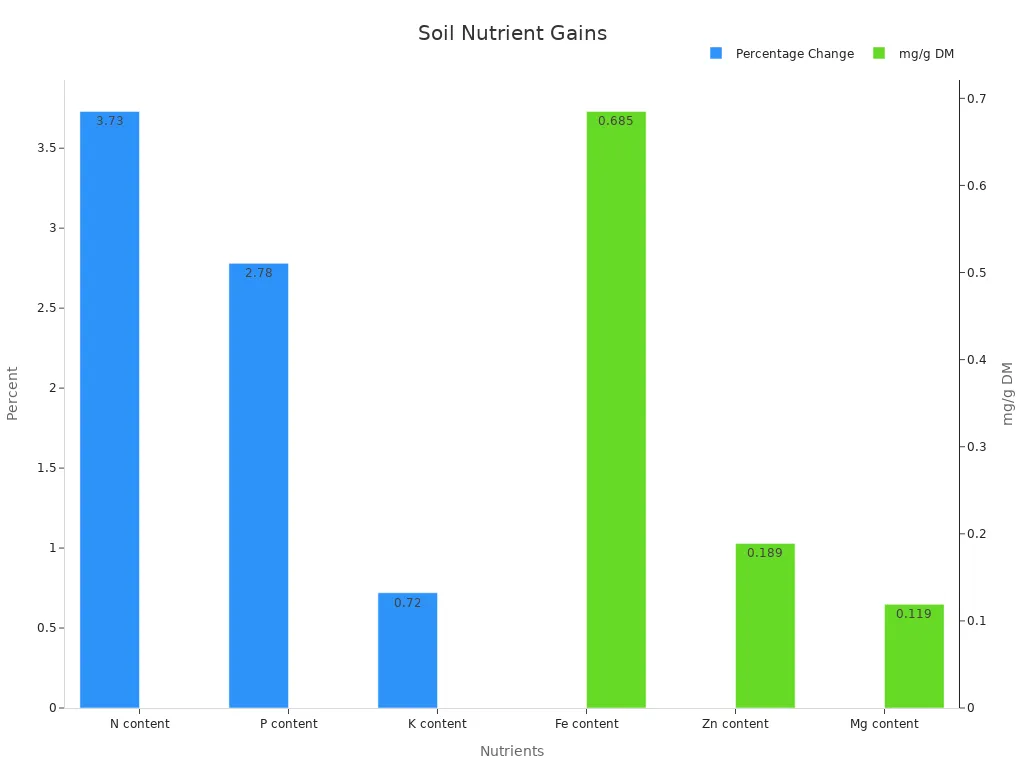
Studies show humic acid makes plants taller and gives them more leaves. It also makes plants heavier and gives them more shoots. In Nonpareil almond trees, humic acid made stems thicker and leaves greener. Plants with humic acid had more nitrogen, phosphorus, potassium, magnesium, iron, and zinc in their leaves. This happens because humic acid opens plant cell walls. Minerals get inside faster. It also changes iron from Fe3+ to Fe2+. Roots can use this form more easily.
Fulvic acids help move nutrients in soil because they dissolve well. They have many active groups. Fulvic acids work best for fast nutrient delivery. Humin does not move nutrients but helps soil stay strong and stable.
Humic acid helps plant hormones like auxin and cytokinin. These hormones help plants grow taller and make more leaves.
Humic acid boosts photosynthesis and helps plants handle stress like drought.
Fulvic acids help nutrients move and let roots take up minerals fast.
Humin makes soil stronger and stops it from washing away.
Humic substances also help good microbes live in soil. These microbes break down old plants and animals. They release nutrients for new plants. Soils with more humic substances grow better crops.
Practical Applications
Farmers and gardeners use humic substances in many ways. Mineral humic acid is a common soil helper. It mixes well with fertilizers and helps crops grow. When added to soil, humic acid helps soil hold water. It raises nutrient levels and helps roots grow strong.
Field tests show humic acid makes crops bigger. For example, potato crops grew 9.3% more with humic acid and fertilizer. Humic acid also helps soil form clumps. This lets water move better and stops erosion. In lawns, humic acid and amino acids made grass greener and stronger at 3 liters per hectare.
Fulvic acids are used in liquid fertilizers. They move fast in soil and give nutrients quickly. Humin is not used as much but helps soil keep its shape for a long time.
Application Method | Benefit |
|---|---|
Soil application | Improves soil fertility and structure |
Foliar spray | Boosts nutrient uptake and plant growth |
Fertigation | Delivers nutrients directly to roots |
Seed soaking | Enhances germination and early growth |
Tip: Pick the right humic substance for your soil and crops. Mineral humic acid is good for long-term soil health. Fulvic acids are best for quick nutrient boosts.
Humic Benefits in Agriculture
Soil Fertility
Humic acid is important for making soil better. When farmers add humic acid, it helps soil hold more water and nutrients. Humic acid makes soil stick together in small clumps. This helps roots grow and lets water move through soil. It also changes how soil works and adds more organic matter. Soil gets a better structure and becomes healthier. Studies show humic acid helps soil enzymes work faster. It also helps good microbes grow in the soil. These changes help plants get more nutrients. In sandy soils, humic acid helps soil keep more water and carbon. Farmers see bigger crops and healthier plants when they use humic acid.
Humic acid also helps keep soil pH balanced. It stops nutrients like nitrogen and phosphorus from washing away. This means plants can use these nutrients longer.
Plant Growth
Humic substances help plants grow in many ways. Humic acid acts like a natural booster for plants. It helps roots grow longer and stronger. Plants can take in more minerals from the soil. Research shows humic acid helps roots let in more nutrients. It also makes root enzymes work better. This helps plants get more iron and nitrogen.
Measurable Impact | Description | Plant Species / Condition |
|---|---|---|
Roots take up more nitrate and iron | Cucumber | |
Improved drought and salt resistance | Plants handle stress better | Various crops |
Enhanced heavy metal tolerance | Plants grow in polluted soils | Mentha aquatica, Typha orientalis |
Humic acid also changes plant hormones. It raises cytokinin and polyamine in shoots. This helps plants grow taller and make more leaves. Farmers see greener plants and bigger harvests after using humic acid.
Usage Tips
Put humic acid on soil to make it better.
Spray humic acid on leaves to help plants grow.
Mix humic acid with fertilizer for better crops.
For water or soil fixes, mix humic acid with sand or other things.
Make sure the pH is alkaline when using humic acid in water. This helps it work better.
Tip: Always read the label and use the right amount for your soil and crops. Using too much humic acid can hurt your plants, so find the best amount for your farm.
Humic acid helps many kinds of crops and soils. Farmers who use it get better soil, stronger plants, and bigger harvests. Humic substances keep soil healthy for a long time.
Mineral humic acid stands out from other humic substances because it forms strong bonds with minerals in soils. These bonds help soils hold nutrients and water. Humic substances, like fulvic acid and humin, also support soils but in different ways. Farmers see better plant growth and healthier soils when they use the right humic product. Choosing the best humic amendment helps soils stay rich and supports strong plant growth.
Tip: Always match the humic product to the needs of your soils for the best results in plant growth.
FAQ
What is the main difference between mineral humic acid and fulvic acid?
Mineral humic acid has larger molecules and does not dissolve in water. Fulvic acid has smaller molecules and dissolves in water at any pH. Both help soil, but they work in different ways.
Can mineral humic acid improve plant growth?
Yes. Mineral humic acid helps plants grow by making nutrients easier to reach. It also helps roots get stronger and supports healthy soil microbes.
How do farmers use mineral humic acid?
Farmers mix mineral humic acid with soil or fertilizer. They may also spray it on leaves. This helps crops grow better and soil hold more water.
Is mineral humic acid safe for all plants?
Most plants benefit from mineral humic acid. Farmers should follow label instructions and use the right amount. Too much can harm plants.
Does mineral humic acid help with soil erosion?
Yes. Mineral humic acid helps soil form small clumps. These clumps stop soil from washing away during rain or watering.