

Fulvic acid enhances your crops’ ability to take in important minerals like calcium, iron, and zinc. When you use fulvic acid, your plants grow stronger and receive better nutrition. Roots grow faster, and plants can handle stress more effectively. You notice more nutrients going into the plants, which results in bigger harvests and better food. Healthy roots and good plant nutrition, enhanced by fulvic acid, help your crops grow their best.
Fulvic acid helps crops take in more nutrients. It lets plants get important minerals like calcium, iron, and zinc. Using fulvic acid makes roots stronger. It helps plants stay healthy and gives bigger harvests. Spraying fulvic acid on leaves helps plants absorb nutrients faster. This is helpful when plants are stressed. Fulvic acid works as a chelator. It keeps nutrients in the soil for a longer time. Using fulvic acid can help plants use nitrogen better by up to 25%. This helps plants grow more. Strong roots from fulvic acid help plants survive drought and stress. Fulvic acid makes crops more nutritious. This means crops taste better and last longer. Using fulvic acid means farmers need less synthetic fertilizer. This helps make farming better for the environment.
Fulvic Acid Enhances Nutrient Uptake
What Is Fulvic Acid
You might ask why fulvic acid matters for crops. Fulvic acid forms when plants and animals break down. This happens during fermentation. The process makes a substance with many active parts. These parts include carboxyl and hydroxyl groups. They help fulvic acid mix with minerals in the soil. Fulvic acid can dissolve in both acidic and alkaline soils. So, you can use it in many places. This helps plants get nutrients easily, no matter the soil type. Using fulvic acid gives crops a strong way to take in nutrients and grow better.
How Fulvic Acid Works
Fulvic acid helps plants absorb and use nutrients. It is a powerful biostimulant for farming. You see stronger roots and healthier leaves. Harvests get bigger too. Fulvic acid helps crops in two main ways.
Cell Permeability
Fulvic acid makes plant cell membranes more open. This lets nutrients move into cells easily. When you use fulvic acid, plants take in more minerals. These minerals include calcium, iron, and zinc. Studies show fulvic acid helps cell permeability. This leads to better nutrient uptake and growth. Crops grow faster and look healthier because they get more nutrients.
Nutrient Chelation
Fulvic acid acts as a chelator. It binds to minerals and makes small, stable groups. These groups carry nutrients to roots and into cells. Chelated nutrients stay in the soil longer. They do not get locked away. Plants absorb these nutrients better. This helps crops grow and gives higher yields. Fulvic acid also breaks down heavy metals. It cleans the soil and makes it safer for crops.
Tip: Use fulvic acid as a spray or soil mix. This helps plants get more nutrients and grow well.
Here are ways fulvic acid helps crops:
Makes plants take up more phosphorus.
Raises organic acids in roots, making nutrients easier to get.
Helps roots release acids, so they absorb more minerals.
Fulvic vs Humic Acids
You may hear about fulvic and humic acids in soil health. Both come from breaking down organic matter. But they have different uses and features.
Property | Humic Acid | Fulvic Acid |
|---|---|---|
Molecular Weight | Larger, high molecular weight | Lower, around 5,000 to 10,000 Da |
Solubility | Less soluble, especially at low pH | Highly soluble across all pH levels |
Agricultural Effectiveness | Improves soil structure and fertility | Enhances mineral transport and detoxifies soil |
Fulvic acid is smaller and dissolves better than humic acid. You can use it in more ways. Plants absorb fulvic acid faster. Fulvic acid works like a train, moving minerals to roots. It also breaks down heavy metals. This makes soil cleaner and safer. Humic acid helps soil hold nutrients and keeps its structure. But it does not move nutrients into plants as well as fulvic acid.
Acid Type | Key Characteristics | Role in Nutrient Uptake |
|---|---|---|
Fulvic Acid | Smaller, more soluble, higher oxygen content | Enhances nutrient transport, chelates micronutrients, increases cell membrane permeability |
Humic Acid | Complex mixture, contributes to soil structure and nutrient availability | Helps retain nutrients, promotes microbial activity, enhances nutrient cycling |
If you want crops to take in nutrients fast, choose fulvic acid. It works well as a biostimulant. It helps plants absorb nutrients and grow quickly.
Fulvic Acid Foliar Application
Foliar vs Soil Application
You can use fulvic acid in two ways. One way is to spray it on leaves. This is called foliar spray. The other way is to put it in the soil. Foliar spray helps plants get nutrients fast. The leaves have tiny holes called stomata. Nutrients go in through these holes. When you use soil application, roots take up the nutrients. Foliar spray works faster than soil application. It is good when plants need help right away. Many Italian farmers use foliar spray at important times. This helps crops recover from stress and take in more nutrients.
Foliar spray is great if your plant is missing nutrients or is stressed. You will see results faster than with soil application.
Nitrogen Use Efficiency
Fulvic acid foliar spray helps plants use nitrogen better. Nitrogen helps plants grow and keeps leaves green. When you spray fulvic acid on leaves, plants use nitrogen more easily. Tests show fulvic acid can help plants use up to 25% more nitrogen than normal fertilizer. This is very helpful in some soils. In alkaline and calcareous soils, nutrients can get stuck. Fulvic acid acts like a helper and makes nutrients easier for plants to use.
Evidence Type | Findings |
|---|---|
Nitrogen Use Efficiency | Fulvic acid can increase nitrogen use efficiency by up to 25% compared to conventional fertilizers. |
Soil Type | Particularly effective in alkaline and calcareous soils where nutrient fixation is problematic. |
Nutrient Absorption | Improves nutrient absorption by acting as a natural chelating agent, enhancing bioavailability. |
When you use fulvic acid foliar spray, plants get more from fertilizer. This means they grow stronger and give better harvests.
Best Practices
To get the best results, follow these tips:
Use biostimulants at important times like planting, growing, and before flowers bloom.
Always read the label and mix it right. Do not mix with things that can hurt plants.
Keep the soil wet and let air get to the roots after spraying.
Change and mix different biologicals during the season. This helps keep the soil healthy.
These steps help plants take in more nutrients and grow well. Fulvic acid helps crops reach their best. Foliar spray works best when you use it at the right time and in the right way.
Tip: Spray leaves early in the morning or late in the day. Plants take in nutrients better when it is not too hot.
Fulvic acid foliar spray is a strong way to help crops. You will see greener leaves, stronger stems, and bigger harvests. Many Italian farmers use this method to get the best from their fields.
Root Growth and Nutritional Uptake
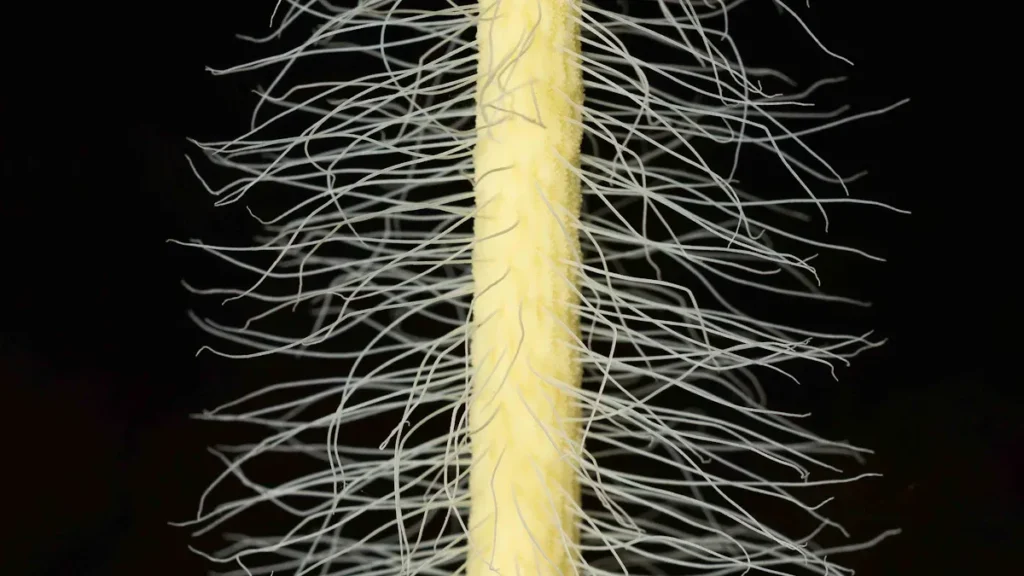
Enhanced Root Development
When you use fulvic acid, you give your plants a strong start. Fulvic works as a powerful biostimulant. It helps roots grow longer and thicker. You see more root hairs and better branching. This means your plants can reach more water and nutrients in the soil. Healthy roots support strong plant growth and higher yield.
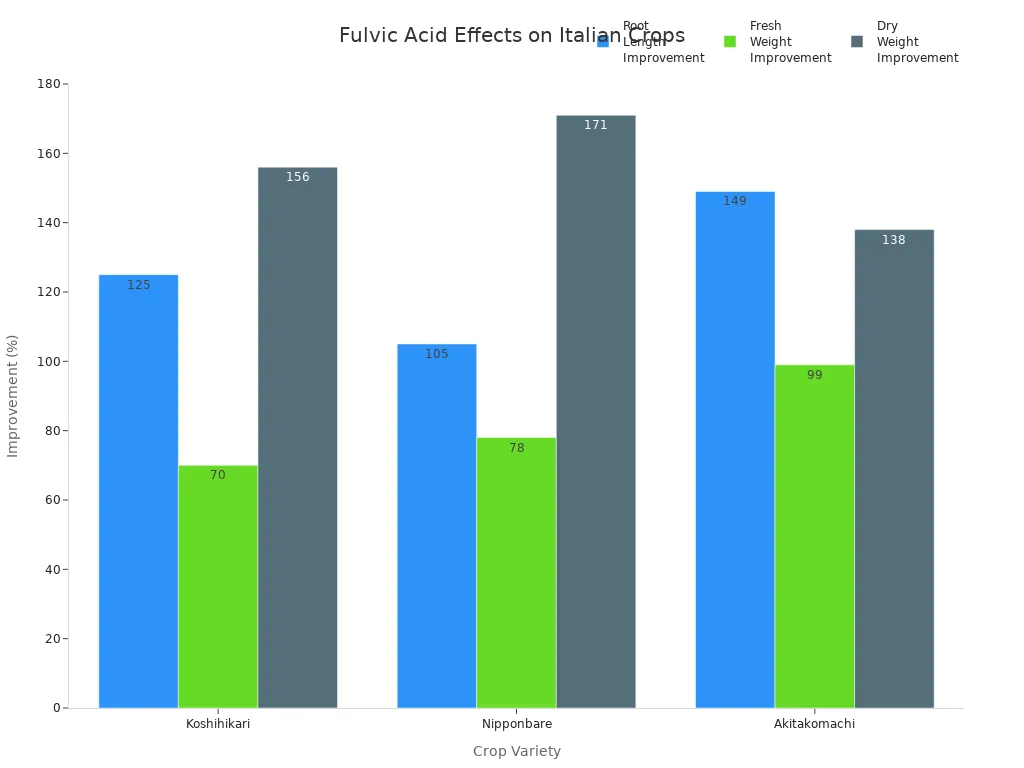
Researchers have measured how fulvic acid enhances root development in different crop varieties. The table below shows how much root length, fresh weight, and dry weight improve after fulvic treatment:
Crop Variety | Root Length Improvement (%) | Fresh Weight Improvement (%) | Dry Weight Improvement (%) |
|---|---|---|---|
Koshihikari | 125 | 70 | 156 |
Nipponbare | 105 | 78 | 171 |
Akitakomachi | 149 | 99 | 138 |
You can see these improvements in the chart below. The chart shows how much root length, fresh weight, and dry weight increase after fulvic application.
Tip: Strong roots help your plants survive dry weather and take up more nutrients. You get healthier crops and better harvests.
Increased Nutrient Concentrations
Fulvic acid does more than help roots grow. It also boosts the amount of nutrients your plants can absorb. When you use fulvic, you help your crops take in more calcium, iron, and zinc. These minerals are important for plant growth and health. You see greener leaves, stronger stems, and better fruit quality.
Calcium
Calcium keeps cell walls strong. It helps your plants stand tall and resist disease. Fulvic makes calcium more available to roots. Your plants take up more calcium, so you see fewer problems like blossom end rot in tomatoes or tip burn in lettuce. With fulvic, you support steady plant growth and better yield.
Iron
Iron helps your plants make chlorophyll. Chlorophyll gives leaves their green color and helps with photosynthesis. Fulvic binds to iron and carries it into plant cells. You notice greener leaves and faster growth. Plants with enough iron grow stronger and produce more.
Zinc
Zinc supports enzyme activity and hormone production. Your plants need zinc for healthy growth and seed development. Fulvic chelates zinc, making it easier for roots to absorb. You see better flowering and fruit set. Crops with enough zinc grow faster and give higher yield.
Studies show that fulvic increases nutrient concentrations in crops. The table below shows how much biomass and phosphorus uptake rise after fulvic treatment:
Crop | Treatment Concentration | Increase in Biomass | Phosphorus Uptake Increase |
|---|---|---|---|
Rice | 40 mg/L (T1) | 25.42% | 20.52% |
Rice | 60 mg/L (T2) | 24.56% | 18.10% |
Rice | 80 mg/L (T3) | N/A | 20.48% |
Another study found that both humic and fulvic treatments increased phosphorus uptake in barley compared to untreated plants:
Crop | Treatment Type | Effect on Phosphorus Uptake |
|---|---|---|
Barley | HA and FA | Increased compared to control |
Note: When you use fulvic, you help your plants get more from every drop of fertilizer. You see better nutrient uptake, stronger growth, and higher yield.
Fulvic acid enhances nutrient uptake in many ways. It improves root growth, increases the amount of calcium, iron, and zinc your plants can use, and helps you get the most from your biostimulants. You see the results in healthier plants and bigger harvests.
Crop Studies in Italy

Tomatoes
Tomato fields change a lot with fulvic. Italian farmers see stronger plants and better fruit. Fulvic helps tomatoes take in more nutrients and water. This means you get more tomatoes and better quality. Field tests show fulvic treatments give bigger harvests. The table below shows how each treatment works:
Treatment | Marketable Yield Increase | Total Fruit Yield Increase | Average Fruit Weight | Plant Biomass Increase |
|---|---|---|---|---|
Control | N/A | N/A | 76.5 g | 13.7 t ha−1 |
Radicon® | 16.1% | 27.2% | 79.4 g | 15.0 t ha−1 |
Futuroot® | 27.8% | 27.2% | 68.1 g | N/A |
Radicon® + Amifort-Plus® | 27.7% | 28.1% | N/A | N/A |
Radicon® (foliar application) | N/A | N/A | N/A | N/A |
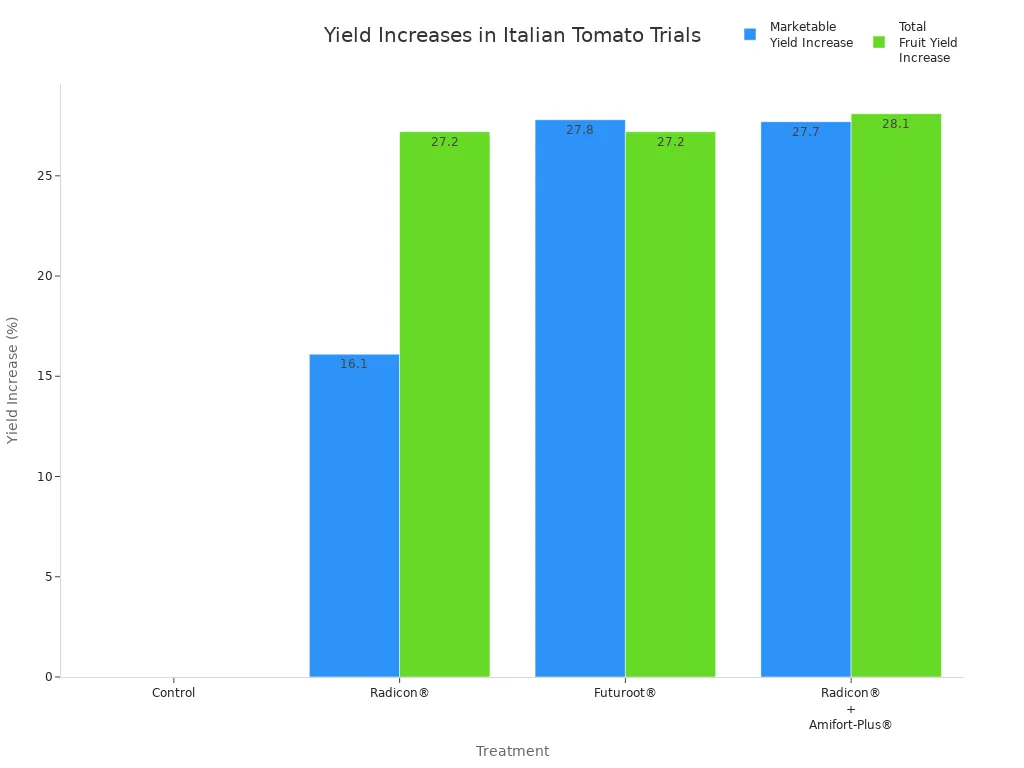
Fulvic gives you more tomatoes to sell and bigger harvests. Plants grow heavier and stronger too. Using fulvic helps your tomato crops do their best.
Olives
Fulvic helps olive trees in Italy a lot. You can get more olives by adding organic matter with fulvic. Farmers who use green forage vermicomposts get 35.5% more olives. Sheep manure gives a 26.8% increase. Fulvic also makes olives better. The oil content goes up, so you get better olive oil.
You pick more olives from each tree.
Olives have more oil inside.
Your olives are worth more money.
Tip: Use composts with fulvic to get more olives and better oil.
Grapes
Fulvic helps Italian vineyards in many ways. It makes grapevines stronger and gives more fruit. Studies show fulvic with microelements and microorganisms improves grape yield and quality. Another study finds fulvic mixed with nutrients helps King Ruby grapevines grow and produce more.
Vines look healthier and have bigger grape bunches.
Grapes taste better and have more sugar.
Vineyards make more grapes every year.
Fulvic helps crops take in nutrients easily. You see better growth and higher quality grapes. Italian farmers use fulvic to make their vineyards better each year.
Comparative Results
When you look at the results from different Italian crops, you see clear patterns. Fulvic acid helps tomatoes, olives, and grapes in unique ways, but you also notice some shared benefits. Comparing these studies gives you a better idea of how fulvic acid works across your fields.
Key Benefits Across Crops
You can spot several improvements when you use fulvic acid:
Higher yields: You get more fruit or olives per plant.
Better quality: Fruits and olives have more nutrients and better taste.
Stronger plants: Roots grow deeper and stems become thicker.
Improved resilience: Plants handle stress, drought, and disease better.
Side-by-Side Comparison
The table below shows how fulvic acid affects each crop. You can use this as a quick guide when planning your next season.
Crop | Yield Increase | Quality Improvement | Root Growth | Stress Resistance |
|---|---|---|---|---|
Tomatoes | Up to 28% more | Larger, heavier fruits | Stronger | Higher |
Olives | Up to 35% more | More oil, better flavor | Deeper | Higher |
Grapes | More bunches/year | Sweeter, more sugar | Healthier | Higher |
Note: Fulvic acid does not just boost one part of your crop. It helps the whole plant, from roots to fruit.
What Makes Fulvic Acid Stand Out?
You might wonder why fulvic acid works so well. It acts on the roots and leaves at the same time. It helps plants take in more minerals and water. This means you use less fertilizer but get better results. You also see fewer problems with nutrient shortages.
Practical Takeaways
When you compare the results, you see that fulvic acid fits many types of Italian farming. Whether you grow tomatoes, olives, or grapes, you can expect:
More harvest to sell at market.
Better taste and nutrition in your produce.
Healthier plants that survive tough weather.
If you want to improve your next crop, fulvic acid gives you a proven way to get better results. Many Italian farmers already use it to boost their fields every year.
Nutritional Benefits and Crop Quality
Improved Nutritional Value
When you use fulvic, your plants get more nutrients. This helps your crops have better nutrition. Fulvic makes it easier for roots to take in minerals. Plants also get other important elements. You see more carbohydrates, proteins, and antioxidants in your food. These changes make your crops healthier for everyone. Your harvest has better nutritional value.
Nutritional Component | Improvement Documented | Crop Examples |
|---|---|---|
Carbohydrate Content | Increased | Damask Rose, Pepper, Tomato |
Soluble Protein Content | Elevated | Wheat, Maize, Pistachio |
Potassium Content | Increased | Eggplant, Lettuce, Tomato |
Zinc Content | Increased | Eggplant, Lettuce, Tomato |
Antioxidant Activity | Enhanced | Pistachio, Wheat |
Flavonoid Content | Surpassed control | Strawberries, Tomatoes |
Fulvic helps many kinds of plants. Your crops have more nutrients. This means better food for your family and customers.
Taste and Shelf Life
Fulvic does more than help nutrition. It also makes fruits and vegetables taste better. Your harvest looks brighter and tastes fresher. Fruits and vegetables stay firm for more days. You can sell your crops for a higher price. You also waste less food.
It makes taste, color, and shelf life better.
Your crops are worth more and look nicer to buyers.
Tip: When crops taste good and stay fresh, you do better at the market.
Resilience to Stress
Fulvic helps plants handle tough weather and poor soil. Your crops keep growing even when it is dry. Fulvic helps plants take in up to 60% more nutrients with micronutrients. Plants stay strong, even when stressed. Seeds treated with fulvic grow better and sprout faster. You see stronger plants and more crops, even in hard times.
Evidence Description | Key Findings |
|---|---|
Nutrient Uptake Efficiency | Fulvic acid can enhance nutrient absorption by 30-60% when used in foliar applications with micronutrients. |
Seed Treatment Benefits | Studies show improved germination rates and seedling vigor under stress conditions when seeds are treated with fulvic acid. |
Market Growth | The market for fulvic acid products reached $1.2 billion in 2022, driven by its role in enhancing crop resilience and soil health. |
Your plants grow better roots and stronger stems. You see steady growth and healthier plants. Fulvic helps you get the most from every season.
Application Methods
Foliar Sprays
You can help crops by spraying fulvic on leaves. This method puts fulvic right on the leaf surface. Leaves have tiny holes called stomata. Nutrients go in fast through these holes. You see changes quicker than with soil treatments. Folvic foliar sprays move trace minerals inside plant tissues. This helps plants grow better and makes fruit quality higher.
Plants get bigger after you spray fulvic on leaves.
Crops like wheat and maize show more antioxidant activity.
Tomato plants make better fruit and give more tomatoes.
Damask rose has more important nutrients after spraying fulvic.
Spray fulvic early in the morning or late in the day. Plants take in nutrients best when it is cool outside. Foliar sprays work well during flowering or fruit set. Use this method if crops look stressed or need more nutrients.
Tip: Check the weather before you spray. Do not spray on windy days. Wind can waste spray and make coverage uneven.
Soil Amendments
You can also mix fulvic into the soil. This method uses fulvic with irrigation water or compost. Roots take up nutrients better when fulvic is in the soil. Fulvic in soil helps roots grow deeper and branch out more. Plants become stronger and fight off drought and disease.
Soil application works best before you plant crops. Mix fulvic with compost or organic matter. This makes soil healthier and gives plants more nutrients. You can also add fulvic during the season to help roots grow.
Application Method | Benefits | Best Time to Apply |
|---|---|---|
Foliar Sprays | Fast nutrient uptake, stress relief | Early morning, late day |
Soil Amendments | Stronger roots, better soil health | Before planting, mid-season |
Dosage and Timing
You need to use the right amount of fulvic at the right time. Match fulvic use to your crop and its growth stage. Most experts say use 40 to 80 milligrams per liter for sprays. Spray fulvic every two or three weeks while plants are growing. For soil, follow the label for how much to use.
Try fulvic on a small area first before treating all crops.
Use fulvic more often when plants grow fast or are stressed.
Do not mix fulvic with chemicals that can hurt plants.
Using fulvic at the right time and amount helps roots, stems, and yields. Follow these steps to help crops grow their best.
Note: Always read the label and ask local experts for advice on fulvic use.
Sustainability and Economics
Reduced Fertilizer Use
You can help your farm by using fulvic. This natural biostimulant helps crops take in nutrients better. When you use fulvic, soil gets healthier. Plants absorb more nutrients. You do not need as much synthetic fertilizer. Fulvic supports farming that is good for the earth. It keeps soil strong for many years.
Fulvic acid makes soil healthier.
Plants take in nutrients more easily.
You use less synthetic fertilizer, which helps the planet.
Soil stays fertile every year.
Farmers in Italy see these changes. Plants grow stronger with less fertilizer. You save money and help nature by using fulvic.
Cost-Effectiveness
You want your farm to make money and last. Fulvic helps you spend less and still get good crops. When you use fulvic, each application works better. Crops grow well, and you buy fewer chemicals. Fulvic makes soil richer, so you do not need much fertilizer.
Here is a table that shows how fulvic saves you money:
Benefit | How Fulvic Helps | Result for You |
|---|---|---|
Less fertilizer needed | Helps plants use nutrients | Lower costs |
Better crop growth | Makes soil richer | More crops |
Fewer chemical inputs | Supports earth-friendly farming | Healthier soil |
Efficient application | Works on leaves and soil | Easy to use |
You see better harvests and save money. Fulvic makes your farm greener and cheaper to run.
Environmental Impact
You care about your land and farming’s future. Fulvic helps you farm in ways that protect nature. When you use fulvic, crops grow with fewer chemicals. Fulvic raises oregano yields in organic farms. You get more plants and more oil when you use the right amount. Fulvic also helps soil and plants in tough places.
The best dose gives more plants and oil.
Some soil and plant features change with fulvic and seaweed.
You help nature by using less fertilizer and keeping soil healthy. Fulvic supports green farming and helps you grow good crops with less harm.
Tip: Pick fulvic for your farm if you want to protect nature and keep soil strong for many years.
You can see fulvic acid helps crops take in nutrients. This natural biostimulant makes plants grow better. Roots get stronger and crops give more food. Plants use nutrients well, so they stay healthy. If you want better crops, use fulvic acid foliar spray for farming that lasts.
FAQ
What is fulvic acid and why should you use it on crops?
Fulvic acid comes from old plants and animals that break down. It is natural and helps crops take in nutrients. Your plants grow stronger and healthier with it.
How does fulvic acid improve nutrient uptake in Italian crops?
Fulvic acid makes plant cells let in more minerals. It also grabs minerals and brings them to roots. Plants get more calcium, iron, and zinc. You get bigger and healthier harvests.
Can you apply fulvic acid as a foliar spray?
Yes, you can spray fulvic acid on leaves. This helps plants get nutrients fast. You see results sooner than if you put it in the soil.
Is fulvic acid safe for organic farming?
You can use fulvic acid in organic farms. It is made from natural things and keeps soil healthy. Your crops grow well without bad chemicals.
How often should you apply fulvic acid to your crops?
Use fulvic acid every two or three weeks when plants are growing. Always read the label for the right way to use it. Plants do best when you use it often.
What crops benefit most from fulvic acid?
Tomatoes, olives, and grapes do very well with fulvic acid. Lettuce, wheat, and maize also get better. Many Italian crops show good results.
Does fulvic acid reduce fertilizer use?
Fulvic acid helps plants use nutrients better. You do not need as much chemical fertilizer. This saves money and helps the earth.
Can fulvic acid help crops during drought or stress?
Fulvic acid helps roots grow and take in more nutrients. Plants can handle dry weather and stress better. You get healthier crops even when times are hard.